 Danijela Cabric
 Aditya Wadaskar
 Ruifu Li
 Tianyi Zhao
 Benjamin Domae
 Ibrahim Pehlivan
 Yen-Chin Wang
September, 2023
Welcome to our new MS student, Nicholas Borda!


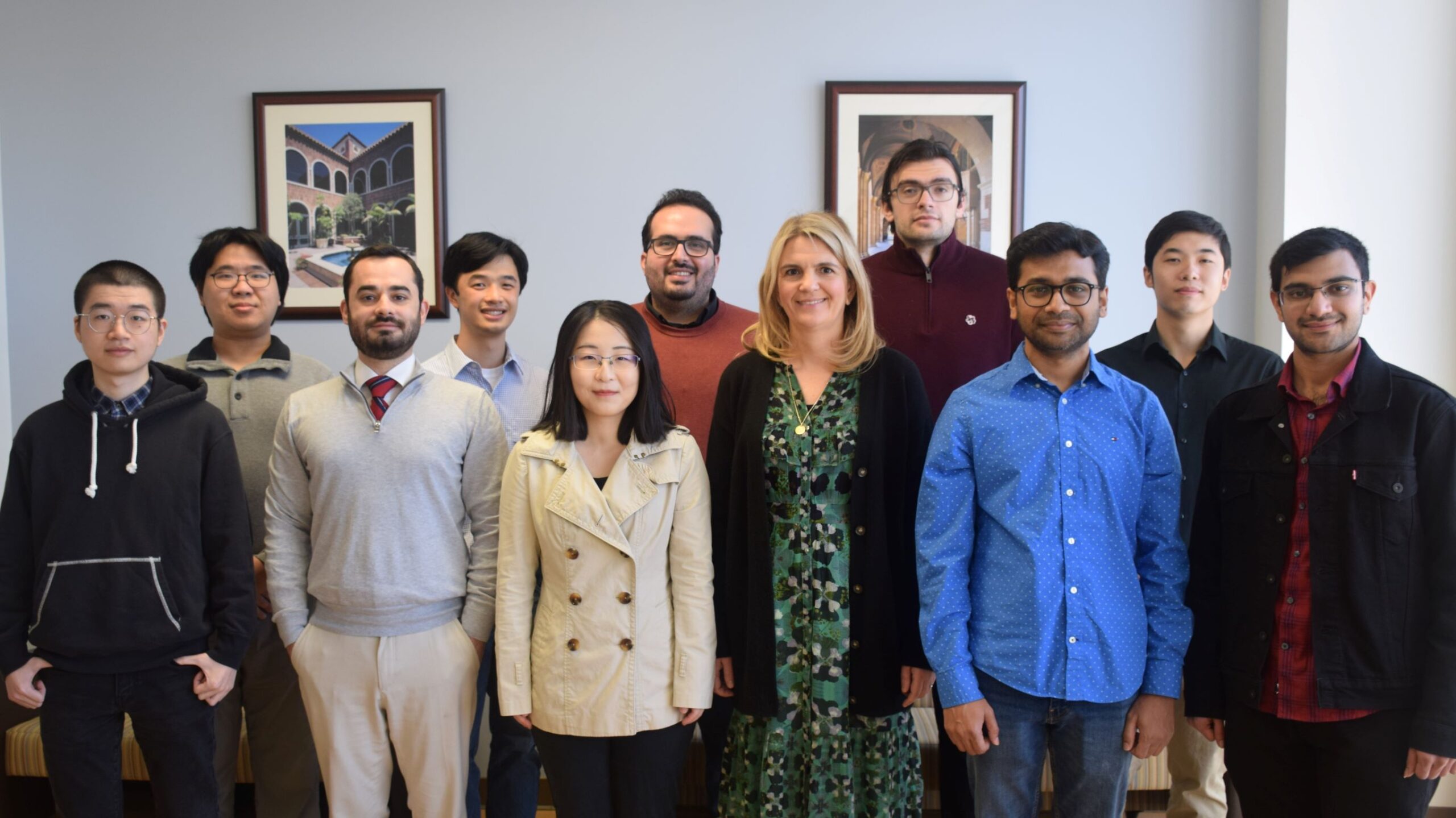
Cognitive Reconfigurable Embedded Systems Lab is a unique research entity within UCLA, which focuses on research in Cognitive Radio and Cognitive Radio-like systems. We are interested in all modern radio technologies, with the emphasis on systems that enable more efficient utilization of spectrum. Our group headed by Prof. Danijela Čabrić is a vibrant and young group of graduate students, international visitors and researchers.
Welcome to our new MS student, Nicholas Borda!
Welcome to our new graduate student, Ibrahim Pehlivan, and our new visiting scholar, Hazem Sallouha from KU Leuven!
Congratulations to Samer Hanna for winning the Best PhD Dissertation Research Award in Signals & Systems!
CORES Lab releases the WiSig dataset!
Welcome to our new graduate student, Manali Sharma, and our new postdoc, Shamik Sarkar!
Congratulations to Benjamin Domae for being selected to receive one of the prestigious Department of Defense (DoD) National Defense and Engineering Graduate (NDSEG) Fellowships!
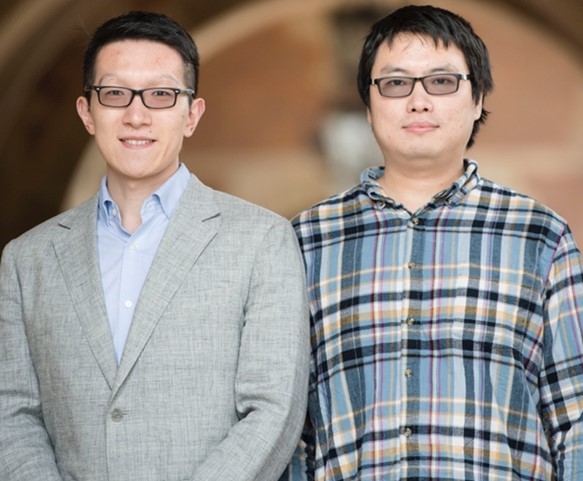
Congratulations to Han Yan, Benjamin Domae and Prof. Danijela Cabric for winning the Best Paper Award at the 4th ACM Workshop on Millimeter-Wave Networks and Sensing Systems (mmNets) 2020 for the paper “mmRAPID: Machine Learning assisted Noncoherent Compressive Millimeter-Wave Beam Alignment”!
Welcome to our new graduate students: Ruifu Li and Aditya Wadaskar!
Congratulations to Han Yan for winning the Best PhD Dissertation Research Award in Signals & Systems!
Congratulations to Enes Krijestorac for securing the 1st place in the Ph.D. Preliminary Examination (Signals & Systems track)!
CORES lab receives a new NSF award for Circuits and Systems Design for UAV Swarm Enabled Communications.
Welcome to our new graduate students: Benjamin Domae and Samurdhi Karunaratne!
Congratulations to Han Yan on winning the prestigious Qualcomm Innovation Fellowship!
Congratulations to Ghaith Hattab on defending his Ph.D. thesis!
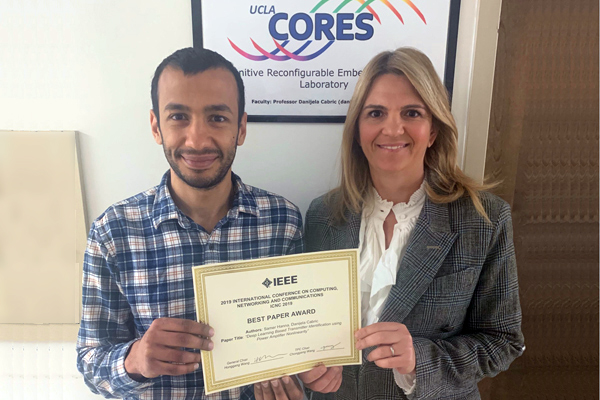
Congratulations to Samer Hanna and Prof. Danijela Cabric for winning the Best Paper Award at IEEE ICNC 2019 for the paper “Deep Learning Based Transmitter Identification using Power Amplifier Nonlinearity”!
CORES lab focuses on advances in radio hardware, signal processing, machine learning, sensing, communications, network protocols, and system architectures to enable future wireless networks. Our vision is that wireless networks require fundamentally new approaches to spectrum access based on dynamic spectrum sharing, operation at high frequencies and network intelligence. Critical to this vision is design of radios with sensing, learning, and cognition capabilities that can enable new dimensions for networks coordination and optimization of spectrum resources across time, frequency, and space. From the implementation perspective, the feasibility of hardware design, its cost and energy efficiency become critically important for their applications and adoption in future 5G cellular networks and Internet-of-Things (IoT). To address these research challenges, we have taken an interdisciplinary approach with a balanced mix of theoretical modeling, algorithmic development, system implementation and experimental validation. Our research activities have revolved around three main research thrusts: